Drug Detox and Outpatient Treatment: Understanding the Connection
When people speak about healing, they frequently speak about detox as if it were the entire job. It is not. Drug detox is the opening phase, frequently the most urgent stage, but seldom the stage that identifies whether someone develops long lasting stability. The real connection to understand is this: drug detox addresses the body's instant reliance, while outpatient treatment addresses the practices, activates, stressors, relationships, and psychological patterns that keep compound use going.
That difference matters due to the fact that many people get in care in crisis. They might be physically dependent, scared of withdrawal, embarrassed of how far things have actually gone, or uncertain what takes place after the very first couple of days. In practice, the duration right after detox can be one of the most vulnerable points in recovery. Symptoms might have eased, however yearnings, sleep problems, low mood, and old routines often remain. If there is no strategy beyond detox, individuals can leave sensation physically much better but emotionally unprepared.
A strong treatment pathway treats detox and follow-up care as connected, not separate. That is where outpatient treatment frequently ends up being important. For some people, outpatient care is the next level after detox. For others, detox is followed first by property treatment, then outpatient work later on. The right course depends on the compound included, the seriousness of usage, mental health needs, medical threat, and whether home is a safe and steady place to recover.
Detox is stabilization, not healing in full
Drug detoxing is the process of helping the body clear compounds while handling withdrawal signs as securely as possible. That may sound simple on paper, but anyone who has actually worked around withdrawal understands how different it looks from one person to another. 2 people can utilize the same drug for roughly the very same length of time and still have very various withdrawal experiences.
Some withdrawals are intensely uneasy. Others can become medically unsafe. Alcohol and certain sedative withdrawals, for example, can involve serious complications. Opioid withdrawal is typically referred to as less most likely to be fatal by itself, however that does not make it small. It can be brutal, dehydrating, demoralizing, and powerful enough to press somebody back to use just to stop the signs. Fentanyl has actually added another layer of difficulty since of its effectiveness and the method it makes complex timing and intensity for some patients.
This is why medically monitored drug detox matters. An effectively monitored setting can keep track of crucial signs, provide medications to decrease withdrawal signs, assistance hydration and nutrition, and offer psychological reassurance throughout a period that can feel disorderly and frightening. According to verified information from Recreate Behavioral Health of Ohio in Gahanna, detox there is medically supervised around the clock, with 24/7 monitoring, symptom management, and support. The center likewise specifies that it provides detox take care of alcohol, opioids, and fentanyl, and that medication-assisted treatment might be part of the process when clinically appropriate.
The normal withdrawal duration is not limitless, however it is not over in a day either. Recreate states that detox typically lasts about 5 to 10 days, depending upon the compound included. That time frame gives individuals a useful reality check. Detox has a start and an end, but it is determined in days, not months. Healing, by contrast, unfolds over a lot longer periods and needs more than physical stabilization.
Why the handoff after detox is so important
One of the biggest mistakes households make is assuming that once the withdrawal crisis passes, normal life can resume. Clinically, that is typically the moment when treatment need to deepen, not stop.
Think about what detox in fact achieves. It helps someone get through the intense stage of stopping or reducing compound usage. It can make them medically much safer. It can bring back enough clarity for informed decisions. What it does not automatically do is teach coping skills, rebuild judgment under stress, repair work strained household dynamics, or produce structure for the weeks ahead.
Outpatient treatment fills part of that gap. In broad terms, outpatient care permits an individual to receive therapy, relapse prevention support, and ongoing medical tracking while continuing to live at home. That sounds basic, however it is a significant shift. Detox safeguards an individual during the storm. Outpatient treatment teaches them how to live when the storm passes however the weather condition is still unsettled.
That is why continuity matters. Recreate Behavioral Health of Ohio describes its services as a continuum of care that can include detox, domestic inpatient treatment, intensive outpatient shows, outpatient care, and peer support. It also mentions that detox and rehab services are provided in one center, which permits patients to move from detox into further treatment without altering places or groups. That type of continuity can minimize the drop-off that frequently happens when individuals are discharged from one setting and expected to browse the next action on their own.
From a practical perspective, less handoffs frequently imply fewer opportunities for confusion, hold-up, or doubts. In genuine medical settings, individuals do not always leave detox sensation arranged and definitive. Some are exhausted. Some are ashamed. Some aspire to prove they do not require more assistance. If the next stage is unclear or inconvenient, motivation can evaporate fast.
Outpatient treatment works best when timing is thoughtful
Not everyone should go directly from detox to standard outpatient care. This is where excellent evaluation matters more than optimism.
A person coming off a compound with serious withdrawal risk, or somebody with unstable psychological health signs, may need a higher level of care after detox, such as property inpatient treatment, before stepping down into outpatient work. Recreate explicitly notes this continuum, which is medically practical. Detox is not the very same thing as rehabilitation, and the next step should match the person's actual level of requirement, not just their preference.
That stated, outpatient treatment can be a suitable and reliable next step for many people, especially when the home environment is stable and the person can reliably attend sessions. It lets individuals begin rebuilding ordinary life while remaining linked to treatment. They might return to work gradually, resume parenting responsibilities, or repair everyday regimens, all while receiving structured support.
The timing can be delicate. If outpatient starts far too late after detox, the person might drift back towards old patterns before new skills have time to take hold. If it starts promptly, there is a much better opportunity of using the momentum detox develops. People typically leave detox with a short window of clearness. They have actually felt the cost of substance use dramatically, and they know their vulnerability. That is typically the best time to enhance treatment engagement.
The real bridge in between detox and outpatient care
What connects these two levels of care is not just scheduling. It is medical purpose.
Detox asks, "How do we help this person get safely through withdrawal?"
Outpatient treatment asks, "How do we assist this person remain participated in recovery while residing in the real world?"
Those are various questions, however they come from the very same procedure. The bridge between them normally consists of education about relapse danger, preparing for yearnings, determining triggers, going over medication alternatives when pertinent, and deciding how much structure a person needs as soon as severe withdrawal has passed.
People are frequently shocked by just how much threat stays after the physical signs enhance. Hunger may come back. Sleep may start to normalize. The individual may look better to relative. That can create incorrect self-confidence. Yet the very first few weeks after detox are often marked by poor disappointment tolerance, psychological swings, dullness, and strong cues connected to familiar places or people. Somebody may understand they do not want to utilize, and still find themselves grabbing a substance when stress spikes on a regular Tuesday afternoon.
Outpatient care develops repeated points of contact throughout that vulnerable period. Those contacts matter. Recovery is enhanced by rhythm, visits kept, conversations reviewed, obstacles taken a look at before they end up being collapses. A single therapy session seldom alters a life. Constant treatment in time often does.
How medication-assisted treatment can suit the picture
For some types of compound use, medication-assisted treatment can connect detox and outpatient care in a really practical method. Recreate's detox info mentions that medication-assisted treatment may be used for alcohol, opioids, and fentanyl-related care. That is essential because medication is not merely a convenience step during withdrawal. Sometimes, it can likewise support continuous recovery after the acute detox phase has actually ended.
There is still public confusion around this. Some families believe utilizing medication indicates a person is not truly in healing. That view tends to overlook the truth of relapse danger and the value of reducing cravings, stabilizing brain and body function, and enhancing treatment retention. Medication is not a universal answer, but it can be a genuine part of a treatment plan when medically indicated.
The bottom line is that detox and outpatient treatment do not need to run in separate silos. If medications are part of withdrawal management, the outpatient phase might end up being the setting where that medication strategy is examined, kept track of, and integrated into a broader healing method. The most reliable plans are generally coordinated rather than fragmented.
What outpatient treatment can and can not do
Families sometimes anticipate outpatient care to solve everything because it feels more sustainable than inpatient care. That expectation requires a little realism.
Outpatient treatment can supply accountability, restorative assistance, education, and continued medical oversight. It can assist a person develop routines that support abstaining or recovery objectives. It can likewise assist address co-occurring mental health issues when the program is geared up for that work. Recreate determines itself as a substance use and mental health treatment center, which shows an essential reality in the field: dependency care and psychological health care are often firmly connected.
What outpatient care can not do is eliminate a person from a chaotic home, stop them from leaving a difficult relationship, or prevent every spontaneous decision. Its success depends partly on the surrounding environment. If somebody goes home after detox to active drug use in the household, unstable housing, continuous dispute, or no transport, even a strong outpatient plan might struggle.
That is why the level of care decision need to never be based only on what feels least disruptive. In some cases the least disruptive option ends up being the least effective one.
Signs that outpatient care might be an affordable next action after detox
There is no ideal checklist, but certain aspects frequently support an outpatient transition after drug cleansing:

- The person is clinically steady after withdrawal.
- Home is fairly safe and free from continuous compound use cues.
- The person can participate in appointments consistently.
- Mental health signs are manageable without 24-hour supervision.
- There is desire to stay participated in treatment beyond detox.
Even when these aspects exist, outpatient treatment still works finest when the plan is concrete. Vague pledges to "find a counselor later on" are not the same as a set up transition into structured care.
The value of sticking with one treatment team when possible
One information that matters more than many people understand is whether a patient has to reboot their story at every stage. Recreate states that detox and rehab services are offered in one facility, so an individual can move from detox into further care without changing places or treatment teams. That might seem like a benefit problem, but scientifically it can be a lot more than that.
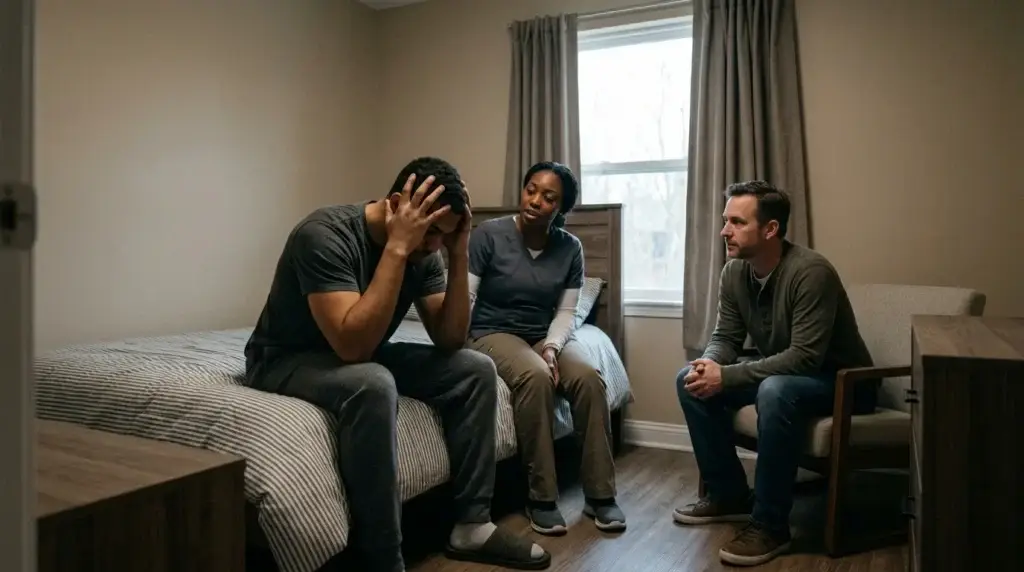
Every transition in treatment carries friction. New intake paperwork, brand-new staff, brand-new expectations, brand-new transportation logistics, new connection structure, new stress and anxiety. For someone fresh out of detox, those barriers can feel bigger than they seem from the exterior. Familiarity decreases the cognitive load at a time when people are frequently still physically and mentally depleted.
There is also healing worth in continuity. When the very same company handles multiple levels of care, staff might already comprehend the person's withdrawal course, medical issues, early triggers, and initial objectives. That can create a smoother handoff into ongoing therapy. Rather of investing the first outpatient sessions rebuilding the crisis, treatment can move faster into what comes next.
What households should ask before the detox phase ends
Families often focus hard on admission to detox and not enough on discharge preparation. A much better approach is to ask early how the next phase will work. If a program offers numerous levels of care, that conversation needs to begin before detox is over.
The most helpful questions are not abstract. They are practical. What level of care is being advised after detox, and why? If outpatient is the plan, how quickly does it start? If outpatient is not enough, what is the step before it? Will medication continue to contribute? What assistance is available if the individual begins to slip?
Here are a few concerns worth raising before discharge:
- What is the recommended next level of care after detox?
- How soon can that next action begin?
- Will the exact same center or team continue treatment?
- Is medication-assisted treatment part of the plan?
- What occurs if symptoms or cravings heighten after discharge?
These questions are not about being hard. They are about lowering preventable gaps. In dependency treatment, spaces are costly.
Insurance, gain access to, and the reality of follow-through
Even strong treatment recommendations stop working when gain access to is uncertain. Cost worries, protection concerns, and administrative confusion can thwart treatment momentum fast. Recreate states that it accepts most significant insurance plans and provides insurance coverage verification assistance. For many households, assist with verification is not a little administrative perk. It can be the difference in between acting today and holding off care up until motivation fades.
Access likewise includes geography and logistics. Recreate Behavioral Health of Ohio lies in Gahanna, near Columbus, which may matter for regional residents trying to collaborate family involvement, transport, and continuous outpatient participation. Outpatient care just works if individuals can actually get to it, or otherwise dependably take part in the format used by the supplier. Convenience is not the sole aspect, but it frequently affects retention more than people admit.
Recovery tends to improve when the strategy matches the person
One of the factors this topic gets oversimplified is that individuals desire a single answer. They need to know whether detox suffices, whether outpatient is enough, or whether a specific timeline warranties success. Genuine treatment does not work that way.
A patient utilizing opioids with duplicated regression after previous detox efforts might require a very various strategy from a client going into take care of the very first time with strong household assistance and a steady home. An individual with serious stress and anxiety or anxiety might require more extensive follow-up drug detox than somebody whose psychological health is otherwise steady. An individual leaving detox for alcohol may deal with various medical and behavioral risks than someone detoxing from another compound. Great care is responsive, not generic.
What must remain constant is the concept that detox is the start of treatment, not completion of it. The body may support before the life does. Outpatient treatment assists close that gap by giving people structure while they rebuild everyday function. In some cases, it is the immediate next step. In others, it belongs to the later step-down process after residential care. In any case, the connection is fundamental.
A clinically monitored detox program can offer security, observation, sign relief, and a clear starting point. Recreate's design, which includes detox, property alternatives, extensive outpatient programming, outpatient care, and peer support within one continuum, reflects a useful understanding of how recovery usually unfolds. Individuals do not all need the exact same level of care, but they do need continuity, planning, and a next action that is more than a hopeful idea.
When detox and outpatient treatment are treated as connected phases of one recovery process, clients have a better opportunity of moving from short-term stabilization to something more durable. That is the goal, not just surviving withdrawal, however developing enough assistance after withdrawal that a various life becomes possible.